From scattered
to standard.
The team rated its own process poorly, without being able to say exactly why. I led the investigation, combined theory, benchmarks and the team's actual practice, and shared the building of the guide among the designers who would use it every day.
Where this came from.
It started at a tribe meeting where we ran an exercise on the tribe's Health Check spreadsheet: each designer rated the health of day-to-day work, with room for suggestions and improvement opportunities.

Each squad decided by gut feeling what was enough to move to the next phase.
Process got widespread neutral scores, and dragged other indicators along with it, such as "Final value", "Productivity" and "Cadence".
The design process had no standard: each squad decided by gut feeling what was "enough" before moving to the next phase, something that only became visible when the team stopped to talk about it. There was no minimum requirements document saying what had to be ready before moving from understanding to solution.
Create an upfront planning document for each initiative.
Create an upfront planning document for each initiative, to make the process official, estimate execution time and define a success metric before building. Plus a weekly meeting for the team to talk about process and initiatives.
I led the project from start to finish, bringing the other designers in to collaborate.
I took the scattered Health Check results and turned them into a project with a defined scope: what would be investigated, with what method, and how far it would go. I led the groundwork: cataloging the 29 books and frameworks, mapping the documented practice of more than 10 benchmark companies, and designing the three questions of the team exercise. I also defined the cross-referencing method: overlaying theory, benchmarks and actual practice to find where the three lenses disagreed, instead of writing the guide from a single source.
What became clear
The blurry line between Discovery and Define (the project's most important finding) only surfaced because six people disagreed with each other, and that disagreement became data, not noise.
When the first version was ready, the most deliberate decision I made was not to finish it alone. I opened the six remaining templates and assigned one to each designer, and used the new weekly meeting (the Round Table) as a space for collective review before publishing. Bringing people in wasn't delegating tasks: it was making sure that whoever would use the guide every day had also signed off on it. A document imposed from the top down becomes bureaucracy; a document the team helped write becomes a tool.
How we back the guide: the project's evidence base.
To avoid assumptions, we grounded every guideline in traceable sources, resting on three pillars: established theory, market references and our team's current practice.
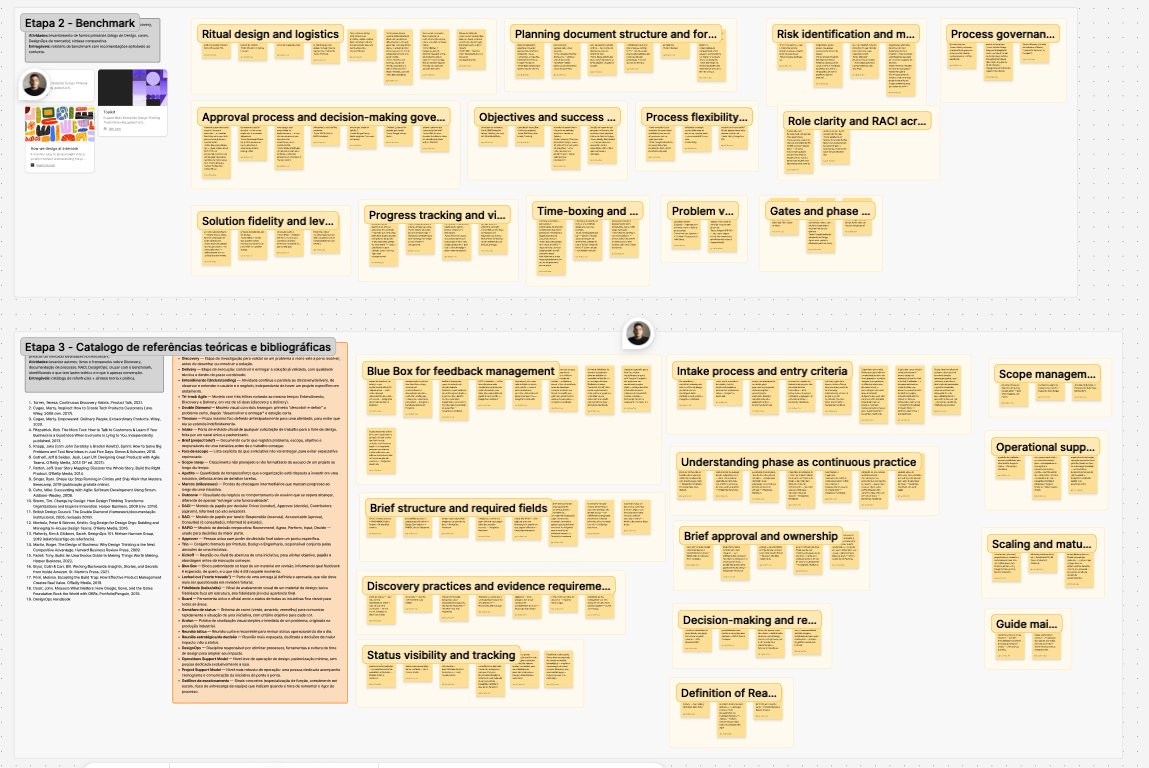
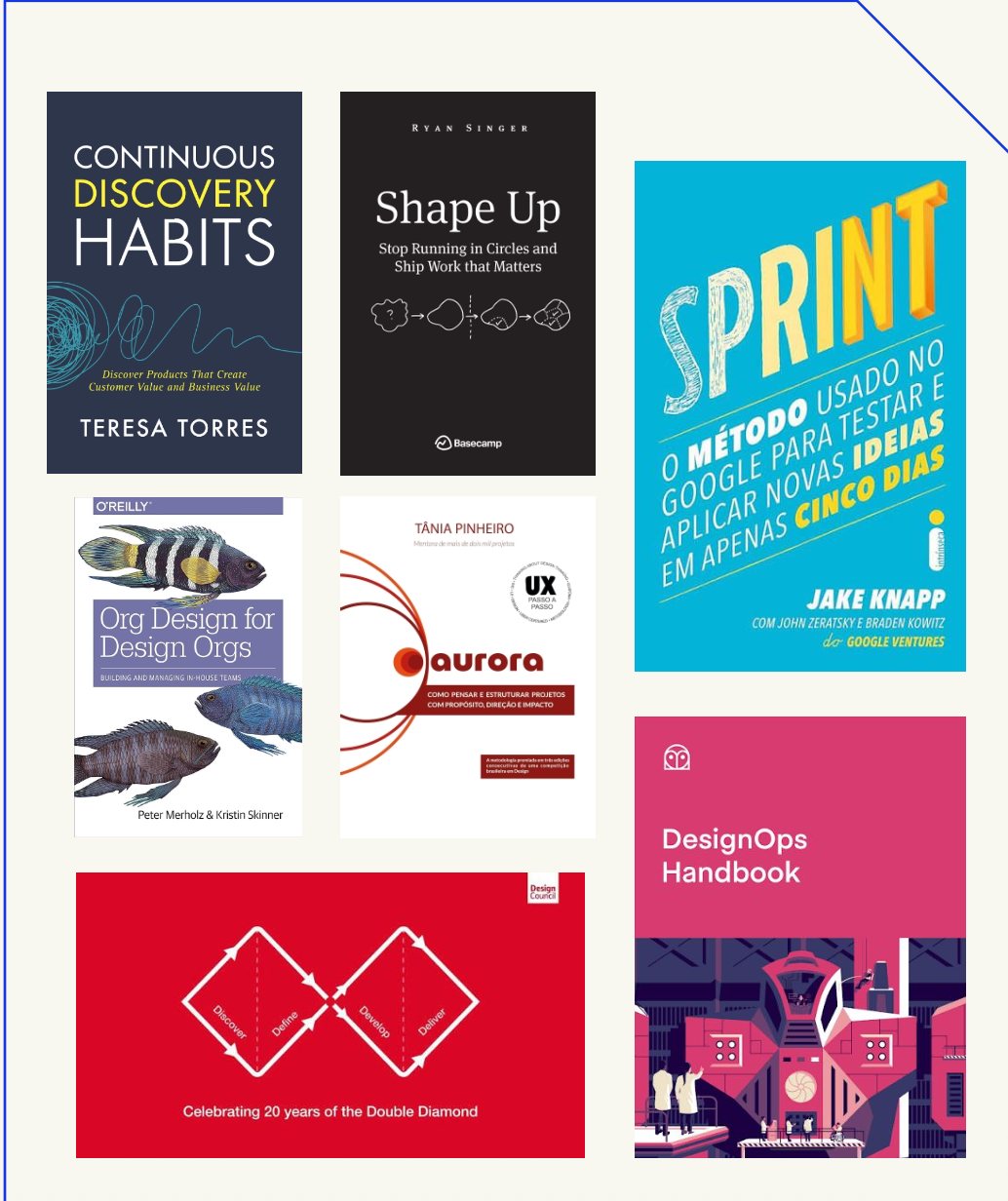
Theory: 29 materials cataloged
We cataloged 29 books and frameworks, from Continuous Discovery Habits (Teresa Torres) to Shape Up (Basecamp), including DACI, RAPID, Kanban and the Double Diamond. The deep dive that paid off most came from the DesignOps Handbook (Dave Malouf). Each requirement carries the author's name in parentheses. Every decision can be traced to its source.
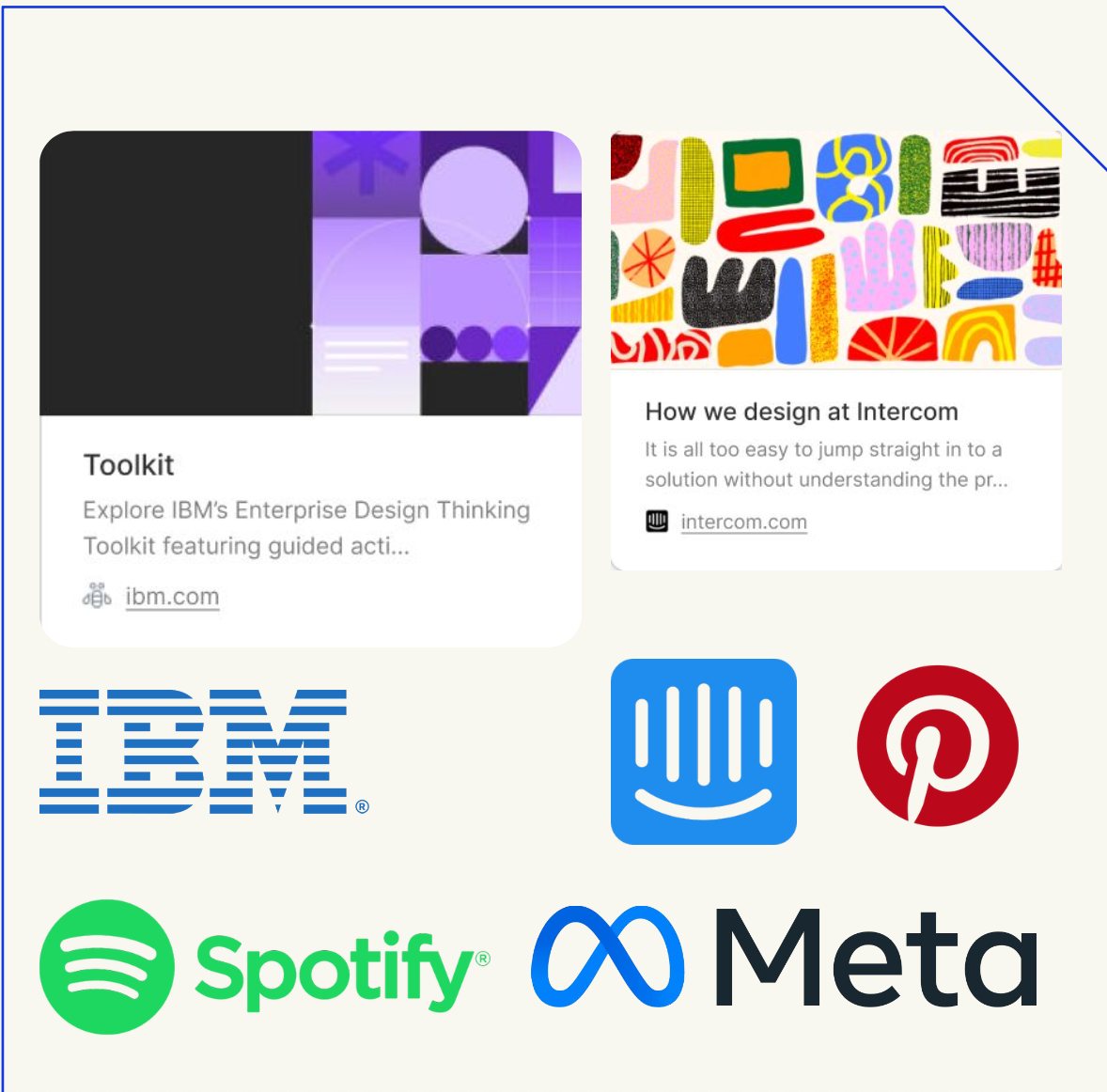
Benchmarking: 10+ companies analyzed
We looked at the documented practice of more than 10 companies (IBM, Intercom, Google, Amazon, Pinterest, Meta, Basecamp, InVision, Spotify, Microsoft and Airbnb), separating process published by the company itself from principles with no public artifact.
"Said it doesn't have a single rigid process, only mandatory rituals within a flexible process."
(Meta, on its own design practice)Team exercise: three questions asked
- Where each stage and ritual sits in the process: the mental map of where each deliverable or ritual belongs in the double diamond
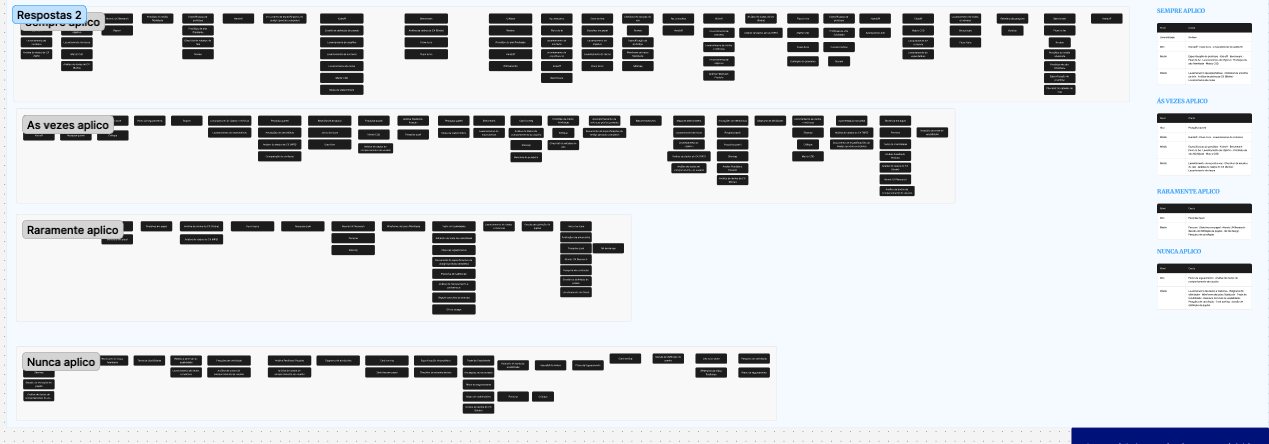
- How these stages are applied in practice, with real frequency: always, sometimes, rarely or never
- What is essential at each stage: what is non-negotiable for the people doing the work
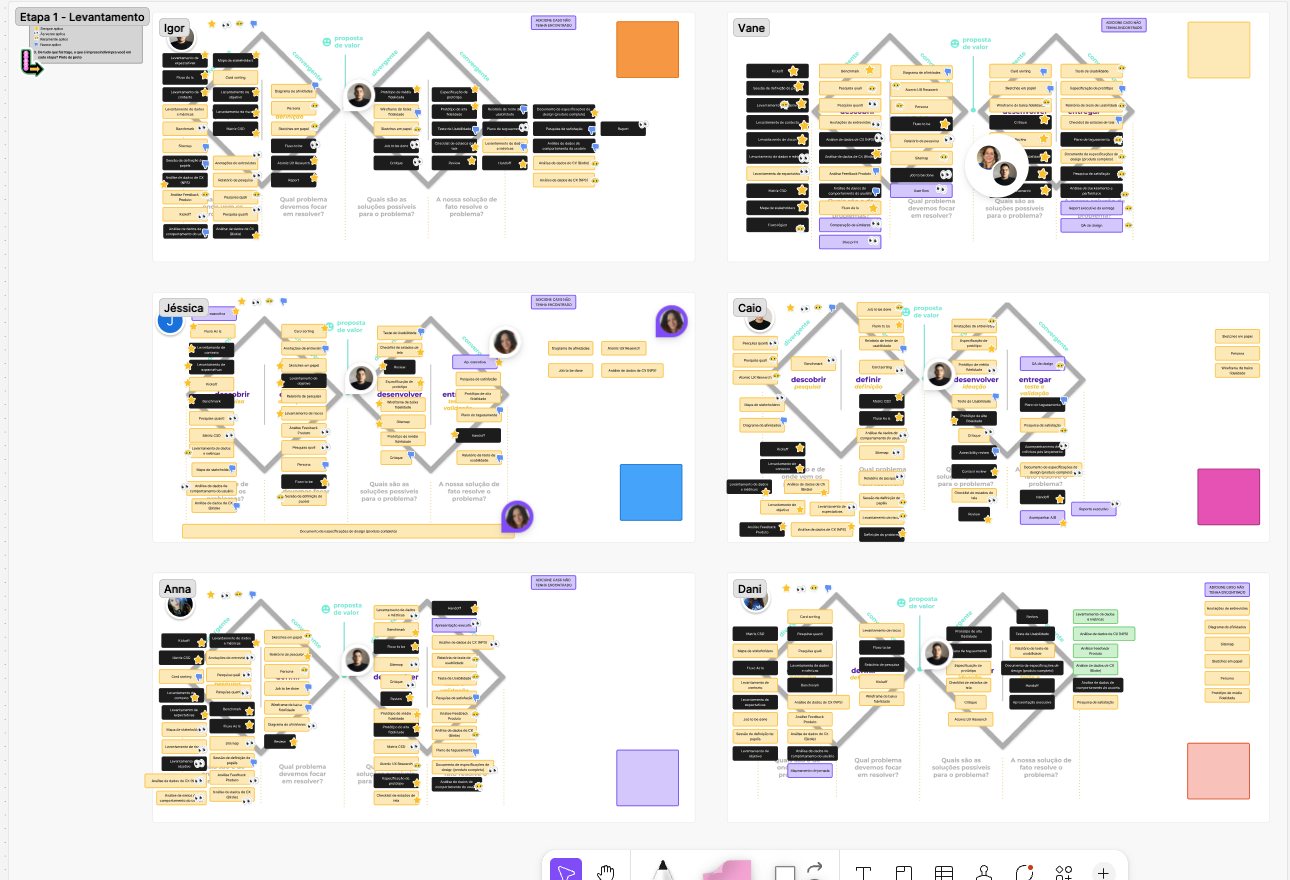
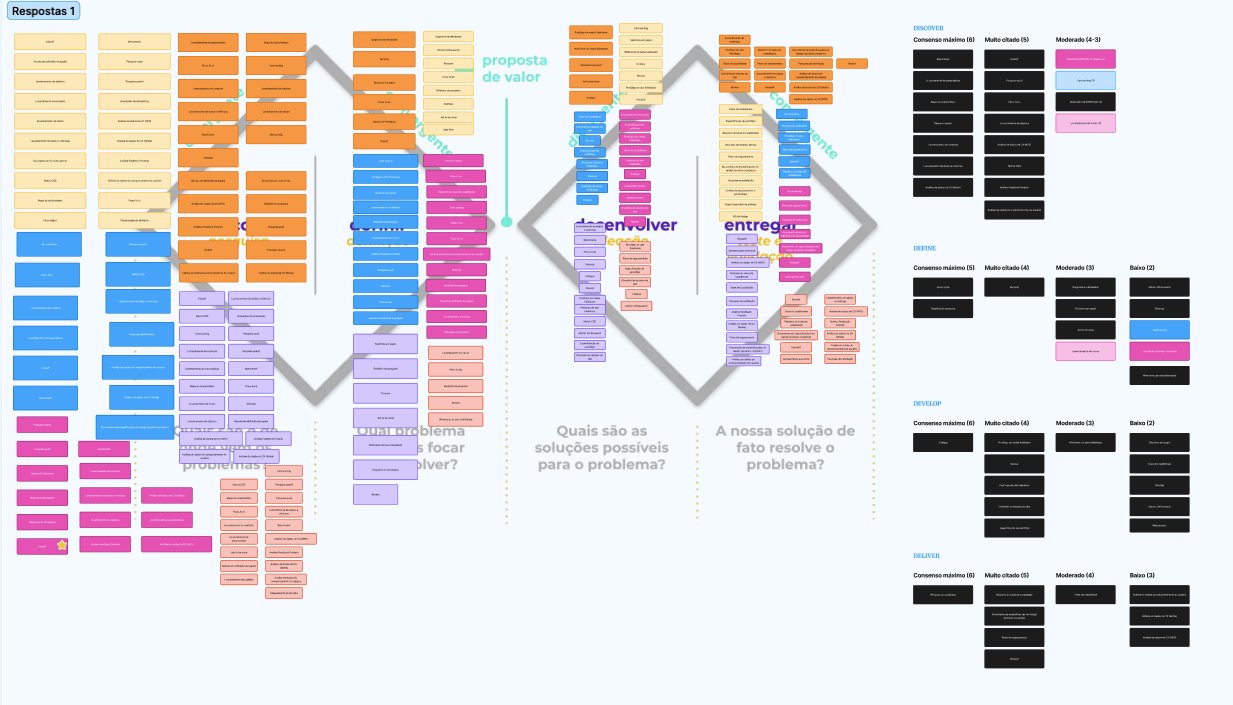
The results exposed a blurry line between Discovery and Define. Discovery had maximum consensus: 7 items with 6 out of 6 mentions. Define had almost none. Only 1 item went above 1 mention, and 16 cards moved freely between the two stages depending on who answered. "Review" was the only practice everyone marked as "always apply" among the 22 analyzed. Discovery concentrated 46 mentions (44%) of what was seen as non-negotiable, against only 13 (12%) for Define.
What the data revealed
Overlaying theory, benchmarking and the team exercise, three versions of the same process emerged that almost never line up.
What we found
The team does Discovery, but with no common standard. What's non-negotiable varies by person and by team, and the decision to move forward ends up negotiated case by case. Delivery already converges well across theory, benchmarking and practice, with no blockers. And peer review is the only ritual that's unanimous across all three lenses. It works as is and doesn't need to change.
Pains and needs
There's no standard template or criteria in almost every stage: what to ask, what to document, what must be carried into the next phase. Each team fills that gap its own way. The need isn't a single top-down rule. It's designing, with the team, the templates and guiding questions missing at each stage.
From research to guide
Cataloging
Organized book by book and company by company, each requirement with its source cited.
Assisted reading
Processing the books, bringing in key concepts for deeper study.
Cross-referencing
Analysis of the exercise's consensus patterns by stage, with no manual counting.
Organizing and cutting
Requirements reorganized to remove redundancy and reduce bureaucracy.
Writing the guide
Each conversation produced a document, the knowledge base for v0.
Review
The designers reviewed v0 in Confluence, item by item, with changes recorded.
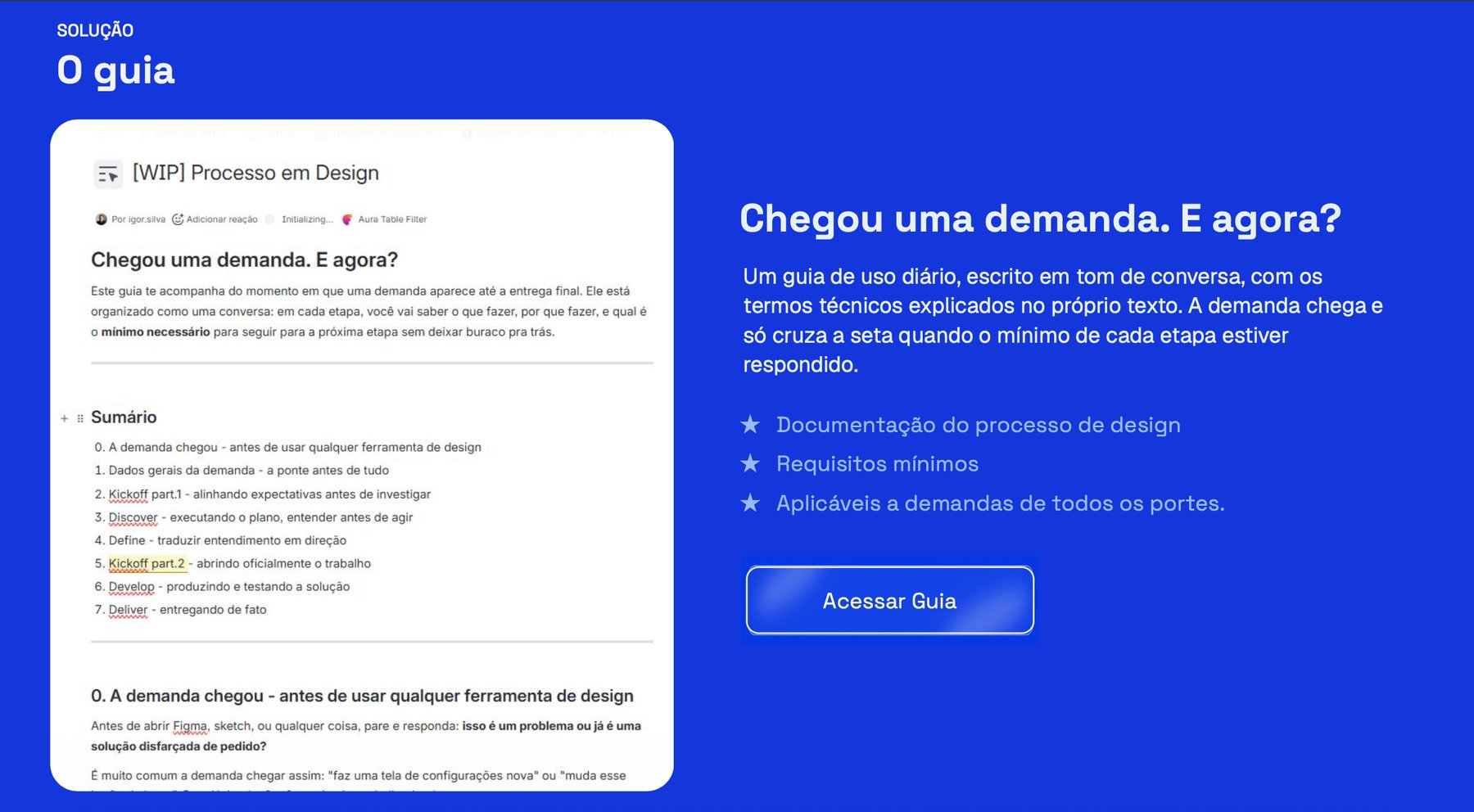
A request just came in. Now what?
An everyday guide, written in a conversational tone, with technical terms explained in the text itself. A request only crosses the arrow once the minimum for each stage has been answered.
The full flow, from intake to delivery
- IntakeAsks whether it's a problem or a solution in disguise.
- General infoSketches the initial picture of the request, with the PM.
- Kickoff 1Aligns expectations before investigating.
- DiscoveryRuns the plan and understands before acting.
- DefineTurns understanding into direction.
- Kickoff 2Officially opens the work.
- DevelopBuilds and tests the solution.
- DeliveryDelivers and measures the result.
Every requirement that called for a fillable artifact has a template. Six templates created, covering every stage of the flow.
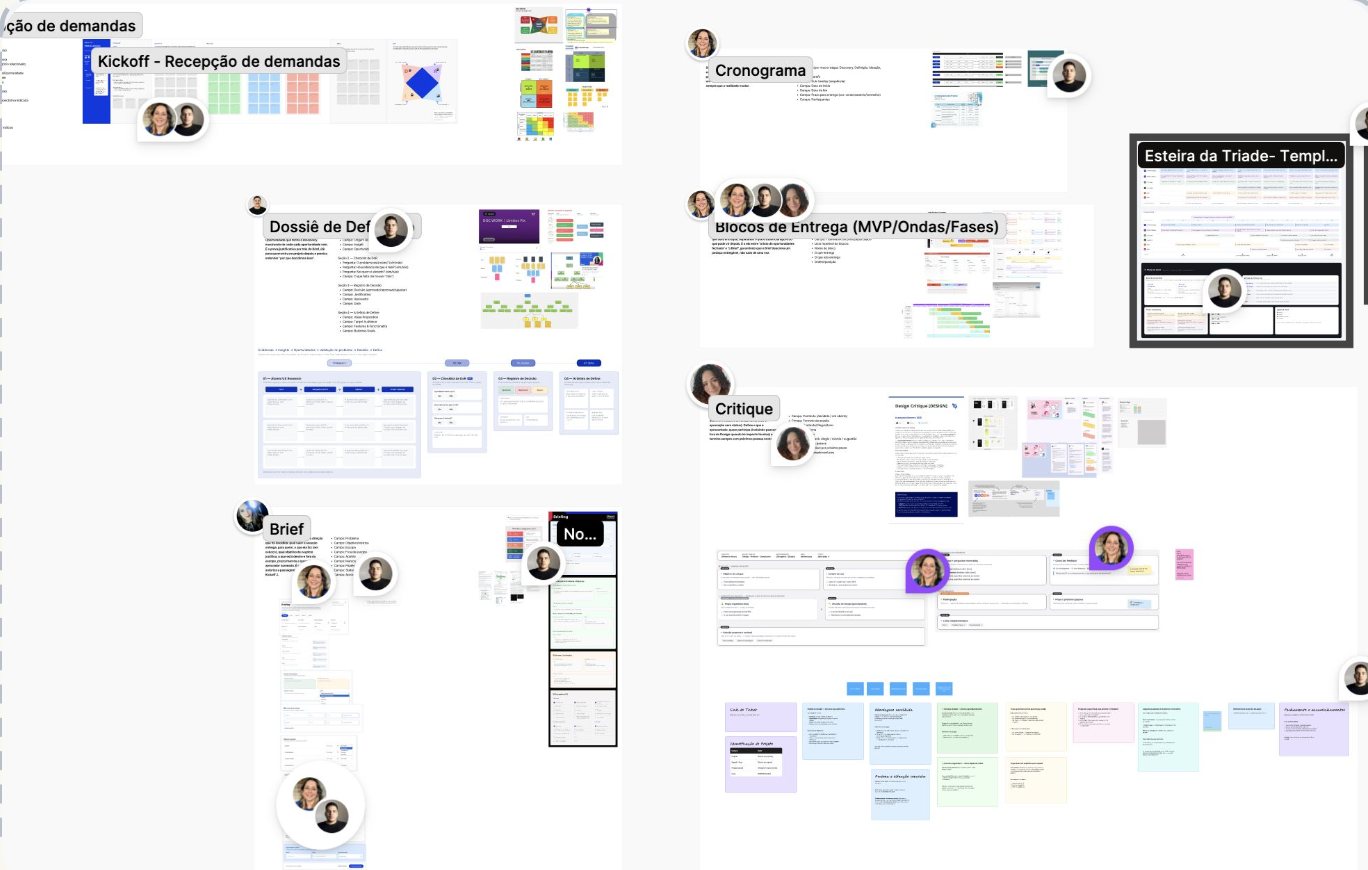
- Kickoff: request intake. Captures and triages any request before it enters the design queue: it gathers the problem (not the solution), who's asking, why now, and the certainty and risk matrix from the first Kickoff.
- Definition Dossier: records the Fact → Insight → Opportunity chain that closes Discovery, the evidence behind the Brief for anyone who joins the project later.
- Brief: sums up the chosen direction on one page: value, audience, scope, deadline and a named approver. It authorizes the move from Define to Kickoff 2.
- Critique: a single standard for journey critiques, used by Product, Design, Engineering, Data and CS, for a full journey or a one-off change, converging on the same wrap-up.
- Schedule (Trio Sync): gives continuous visibility into where the request stands right now, without anyone having to ask. A living document, updated whenever reality changes.
- Quarter Roadmap: decides with the PM the order and cut of what will be delivered, the link between the closed list of opportunities and the Brief.
Still being validated. And that's out in the open, not hidden.
Unlike the other cases, the impact here isn't retrospective. It's a structured hypothesis, with a baseline collected and data collection planned.
| Problem | Solution | Impact hypothesis | Evidence |
|---|---|---|---|
| Weak indicators in the Health Check | Minimum requirements | Reduce rework caused by missing criteria | Baseline: 0–1 out of 6 |
| Blurry Discovery↔Define line | Single-flow process | Named decision role per stage | 44% consensus in Discovery vs. 12% in Define |
| No requirements document | Templates | Standardize without bureaucracy | To be validated |
| Informal onboarding | Application guide | Make it easier for new designers to get started | To be validated |
A Round Table, no swords
A fixed weekly meeting where the team discusses process and ongoing initiatives. The space that didn't exist before, and the one that keeps the guide evolving from here on.
What this project teaches about driving standardization without imposing it from the top down.
- Vague feedback is a symptom, not a diagnosis. A poorly rated process only became an actionable problem after breaking down what was behind that low score
- Standards don't come from opinion, they come from cross-referencing. Theory alone becomes dogma. Benchmarks alone become copying. Listening only to the team without an outside counterpoint perpetuates the bias that already exists. Combining the three lenses is what revealed the blurry line between Discovery and Define
- Sharing authorship increases buy-in. Each template had a designer as its owner, instead of one person writing rules for everyone else to follow
- Traceability is part of the product, not just the research. Each requirement citing its source (author, company or the team's own data) made the guide auditable, instead of a list of arbitrary rules
- Not all impact is immediate, and you can say so honestly. Documenting the hypothesis under validation, instead of waiting for final results to publish, is consistent with the project's own principle: decide with the minimum necessary, not with total certainty
Team involved
- Igor LimaProject lead
- Product DesignerTemplate Brief
- Product DesignerSchedule and Roadmap
- Product DesignerDefinition Dossier
- Product DesignerCritique
- PD LeadDesign Leadership